Python Programming
Reference documents in Python Programming.
Documents in Python Programming
Page 5 of 7-
Add buttons, boxes, pictures and colours and more to your Python programs using the guizero library, which is quick, accessible, and understandable for all.
-
Written by the world-renowned Zed Shaw, this book of 52 hands-on projects is perfect for everyone who's written Python code but isn't yet comfortable taking new ideas all the way to finished software. The perfect follow-up to Shaw's best-selling Learn Python the Hard Way, this all-new, step-by-step book teaches you how to:
-
In this interactive tutorial, we'll cover many essential Python idioms and techniques in depth, adding immediately useful tools to your belt.
-
This book is aimed at teaching Python 3 to students and teenagers who are completely new to programming. Contrary to many of the other books that teach Python programming, this book assumes no previous knowledge of programming on the part of the students, and contains numerous exercises that allow students to train their programming skills.
-
This book is an introduction to computer science using the Python programming language. It covers the basics of computer programming, including variables and values, functions, conditionals and control flow, program development and debugging. Later chapters cover basic algorithms and data structures.
-
Whether you have never written a line of code or you have some programming experience, this book is the right choice because it will inevitably put you in front of new, high-paying job opportunities, ...
-
This tutorial introduces the reader informally to the basic concepts and features of the Python language and system. It does not attempt to be comprehensive and cover every single feature, or even every commonly used feature. Instead, it introduces many of Python's most noteworthy features, and will give you a good idea of the language's flavor and style.
-
An introduction to computer programming with Python 3. Helps the readers in learning the key concepts of Python and understanding how programs work while also imparting foundational logic that can serve the readers in other domains.
-
This book is an introduction to mathematical computing including:
-
Python is eating the world. In recent years it has become so much more than a mere object-oriented, scripting language. Design patterns help you think of and solve problems in chunks. They help you to stand on the shoulders of the giants who have come before, instead of having to reinvent the wheel.
-
This course-based open access textbook delves into Percolation Theory, examining the physical properties of random media—materials characterized by varying sizes of holes and pores.
-
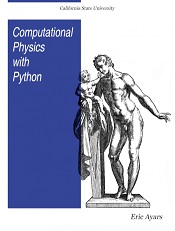
The use of computation and simulation has become an essential part of the scientific process. Being able to transform a theory into an algorithm requires significant theoretical insight, detailed physical and mathematical understanding, and a working level of competency in programming.
-
This book presents computer programming as a key method for solving mathematical problems. There are two versions of the book, one for MATLAB and one for Python. The book was inspired by the Springer book TCSE 6: A Primer on Scientific Programming with Python (by Langtangen), but the style is more accessible and concise, in keeping with the needs of engineering students.
-
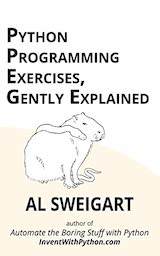
This is the perfect book for beginner and intermediate programmers who want to test their Python skills but aren’t ready to begin professional-level software development. The 42 programming exercises in this book let you practice what you've learned.
-
This book demonstrates how to combine different libraries and frameworks to build amazing things. It picks up where the complete beginner books leave off, expanding on existing concepts and introducing new tools that you'll use every day.