The Linux Operating System
Reference documents in The Linux Operating System.
Documents in The Linux Operating System
Page 1 of 1-
This book merges conceptual operating system (OS) and Unix/Linux topics into one cohesive textbook for undergraduate students, covers Linux from both the user and system administrator positions.
-
CentOS Essentials is a book designed to provide detailed information on the use and administration of the CentOS Linux distribution. For beginners, the book covers the basics of configuring the desktop environment, resolving screen resolution issues and configuring the email client to send and receive email messages via web based services such as GMail.
-
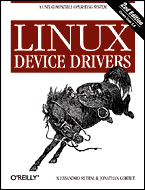
This book is for anyone who wants to support computer peripherals under the Linux operating system or who wants to develop new hardware and run it under Linux. Linux is the fastest-growing segment of the Unix market, is winning over enthusiastic adherents in many application areas, and is being viewed more and more as a good platform for embedded systems. Linux Device Drivers, already a classic in its second edition, reveals information that heretofore has been shared by word of mouth or in cryptic source code comments, on how to write drivers for a wide range of devices.
-
Learning Debian GNU/Linux will guide any new user of Linux through the installing and use of Debian GNU/Linux, the entirely Open Source version of the Linux operating system. It demystifies Linux in terms familiar to Windows users and gives readers only what they need to start being successful users of Linux.
-
This book is designed to provide detailed information on the use and administration of the CentOS 6 Linux distribution.
-
This book dedicates itself to explaining, in detail, how the memory manager is implemented in Linux, thereby cutting down the time needed to understand it from many months to mere weeks. The Linux VM is the single most important component of the Linux kernel. The behavior of the VM affects all other kernel subsystems, and has a dramatic impact on overall system performance.
-
This book is the first start-to-finish guide to patching Linux systems in production environments.
-
Tiny Core Linux (TCL) is a minimal Linux operating system focusing on providing a base system using BusyBox and FLTK, developed by Robert Shingledecker. The distribution is notable for its size (15 MB) and minimalism, with additional functionality provided by extensions. Tiny Core Linux is free and open source software and is licensed under the GNU General Public License version 2.
-
Linux is a Unix-like computer operating system assembled under the model of free and open-source software development and distribution. The defining component of Linux is the Linux kernel, an operating system kernel first released on September 17, 1991 by Linus Torvalds. The Free Software Foundation uses the name GNU/Linux to describe the operating system, which has led to some controversy.
-
The key difference between Microsoft Windows and UNIX is that Windows is meant to be easy to learn, while UNIX is meant to compensate for a steep learning curve by providing extraordinary flexibility to knowledgeable users.
-
This book merges conceptual operating system (OS) and Unix/Linux topics into one cohesive textbook for undergraduate students, covers Linux from both the user and system administrator positions.
-
Just Enough Linux aims at getting you comfortable with some of the commands used in Linux and to hopefully help you 'get' Linux. If you've toyed with Linux and never really caught on to what's happening or have used a graphical interface without really touching the command line this book is for you.
-
This book discusses the ins and outs of Linux in a beginner friendly style to make your learning process frustration free, includes Command Line, Programming and Operating System, as the book does not assume you know anything about Linux.
-
This book provides a soft, accessible, and practical introduction to Linux environments and command line basics, from a basic approach to Linux to a more advanced server-oriented look at using Linux.
-
This book was written with a single unifying goal: to transform the reader from a casual user into a fully competent expert capable of understanding, configuring, administering, programming, and extending modern Linux systems—with precision and confidence.