Prolog Programming
Reference documents in Prolog Programming.
Documents in Prolog Programming
Page 1 of 1-
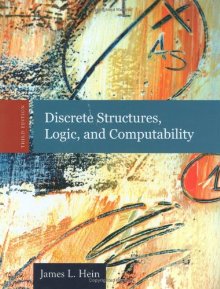
This book introduces beginning computer science and computer engineering students to the fundamental techniques and ideas used by computer scientists today, focusing on topics from the fields of mathematics, logic, and computer science itself.
-
This book is the second volume by the author on Prolog programming and its applications written for Ventus. Whereas in the first book [9], specific Prolog programming techniques were explained, in this volume we discuss some areas where Prolog can be fruitfully employed.
-
The book Prolog Techniques is the first of two volumes by the author on the programming language Prolog and its applications; the second, forthcoming, textbook is entitled Applications of Prolog. In the first volume you can read about the accumulator technique, difference lists, program manipulations and exploratory code development.
-
This is the accompany book of Discrete Structures, Logic, and Computability, Third Edition, by James L. Hein.
-
The course for which these notes are designed is intended for undergraduate students who have some programming experience and may even have written a few programs in Prolog. They are not assumed to have had any formal course in either propositional or predicate logic. The original function was to provide students studying Artificial Intelligence (AI) with an intensive introduction to Prolog so, inevitably, there is a slight bias towards AI.
-
This book covers the Prolog programming language thoroughly with an emphasis on building practical application software, not just theory. Working through this book, readers build several types of expert systems, as well as natural language processing software and utilities to read foreign file formats. This is the first book to cover ISO Standard Prolog, but the programs are compatible with earlier dialects of the language. Program files are available by FTP from The University of Georgia.
-
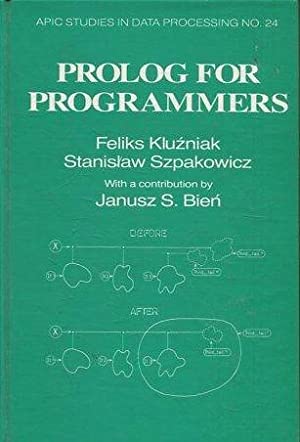
Prolog for Programmers is intended as an introduction to Prolog for people familiar with conventional programming languages.
-
Addressed to readers at different levels of programming expertise, this book offers a departure from current books that focus on small programming examples requiring additional instruction in order to extend them to full programming projects.
-
Prolog is a programming language, but a rather unusual one. "Prolog" is short for "Programming with Logic", and the link with logic gives Prolog its special character. At the heart of Prolog lies a surprising idea: don't tell the computer what to do. Instead, describe situations of interest, and compute by asking questions. Prolog will logically deduce new facts about the situations and give its deductions back to us as answers.
-
The goal of this book is to bridge the gap between the great traditional Prolog textbooks of the past and the language as it currently is, several decades after these books were written. You will see that many limitations of the past are no longer relevant, while several new constructs are now of great importance even though they are not yet covered in any available Prolog book.
-
A tutorial that uses the very first interactive computer games to teach the expressive power of Prolog.