Miscellaneous and Uncategorized Books
Reference documents in Miscellaneous and Uncategorized Books.
Documents in Miscellaneous and Uncategorized Books
Page 5 of 6-
A unique collection of 36 chapters on the history of Chinese medical illustrations, this volume will take the reader on a remarkable journey from the imaging of a classical medicine to instructional manuals for bone-setting, to advertising and comic books of the Yellow Emperor.
-
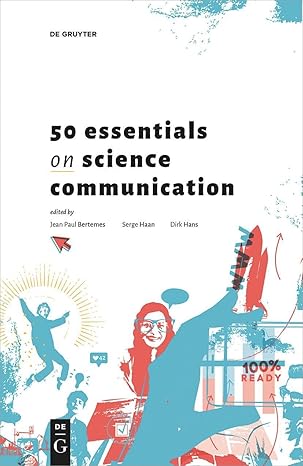
This handy and entertaining book provides the basics of goal-oriented science communication. It is aimed at career-building scientists and anyone who wants to take their first steps in the field of science communication.
-
Writing history is both an art and a craft. This handbook is designed as an instructional guide to support students, independent scholars, and more. This book guides prospective historians on how best to participate in this vibrant community of scholars.
-
This open access book explores the multifaceted interplay of technology, knowledge, and place. While digital technology is increasingly influencing our way of knowing, conversely it is itself the consequence of human creativity and local social interaction.
-
We live in a moment of high anxiety around digital transformation. Anti-computing is widespread. This book seeks to understand its cultural and material logics, its forms, and its operations.
-
This open access book presents an alternative to capitalism and state socialism through the modelling of a post-market and post-state utopia based on an upscaling of the commons, feminist political economy and democratic and council-based planning approaches.
-
How the “invisible hand” of the nervous system makes the human hand such an evolutionary success. This open access book gives a depth and breadth of scientific overview that goes well beyond any single disciplinary training and explains the beautiful sensory and motor mechanisms that make our hands capable of such extraordinary things.
-
Readers will enjoy learning in detail how correlation evolved from a completely non-mathematical concept to one today that is virtually always viewed mathematically. Some topics included here have never been discussed in depth by any historian.
-
This open access book provides a basic overview of the process of engineering design – the "heart" of engineering – in a broadly accessible manner that assumes no specialized knowledge.
-
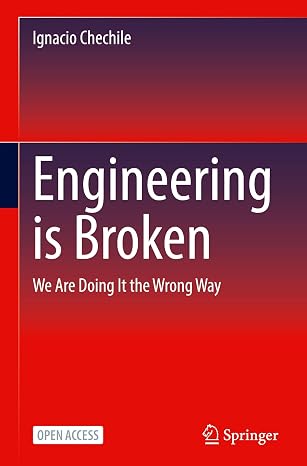
This open access book takes a deep dive into the depths of modern engineering practice. With wit, precision, and just the right amount of indignation, this book exposes the creeping rot behind today’s glossy prototypes, frameworks, standards, and fads.
-
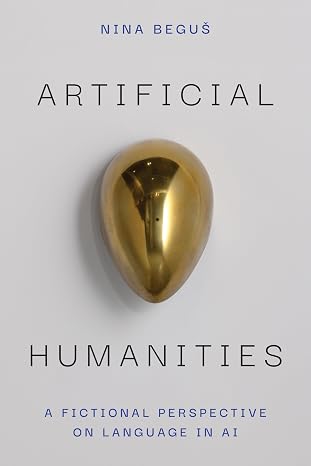
This open access book explores how literature, history, and art can deepen our understanding of artificial intelligence and its development. By examining fictional representations of AI in parallel with actual technological developments, the author presents a novel interdisciplinary framework for understanding the cultural, philosophical, and ethical dimensions of AI.
-
This is the definitive work on file formats - the book that will become a classic for graphics programmers and everyone else who deals with the low-level technical details of graphics files. It includes technical information on nearly 100 file formats, as well as chapters on graphics and file format basics, bitmap and vector files, metafiles, scene description, animation and multimedia formats, and file compression methods.
-
This book integrates science with values and meaning by making the simplest possible assumption about the connection between physical structure and conscious experience. The implications extend to the foundations of mathematics and physics suggesting that Einstein's Intuition near the end of his life was correct that continuous structures do not exist.
-
This open access book makes a case for extending logic beyond its traditional boundaries, to encompass not only statements but also also questions. The motivations for this extension are examined in detail.
-
This open access book sets out to explain the reasons for the gap between "knowing" and "doing" in view of self-reliance, which is more and more often expected of citizens. In today's society, people are expected to take responsibility for their own lives and be self-reliant.