Machine Learning
Reference documents in Machine Learning.
Documents in Machine Learning
Page 2 of 4-
Today's Web-enabled deluge of electronic data calls for automated methods of data analysis. Machine learning provides these, developing methods that can automatically detect patterns in data and then use the uncovered patterns to predict future data.
-
This book blends the foundational theories of machine learning with the practical realities of building tools for everyday data analysis. You'll use the flexible programming languages to build programs that implement algorithms for data classification, forecasting, recommendations, and higher-level features like summarization and simplification.
-
TensorFlow, Google's library for large-scale machine learning, simplifies often-complex computations by representing them as graphs and efficiently mapping parts of the graphs to machines in a cluster or to the processors of a single machine.
-
This book tries to equip the developers of today and tomorrow with tools they can use to better understand, evaluate, and shape machine learning.
-
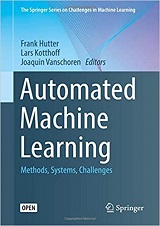
This open access book presents the first comprehensive overview of general methods in Automated Machine Learning (AutoML), collects descriptions of existing systems based on these methods, and discusses the first series of international challenges of AutoML systems.
-
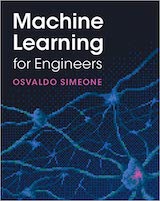
This comprehensive textbook presents basic machine learning methods for civil engineers who do not have a specialized background in statistics or in computer science. In addition to the fundamentals, the book includes several case studies that students and professionals will appreciate.
-
This open access book provides cutting-edge work on machine learning in sports analytics, emphasizing the integration of computer vision, data analytics, and machine learning to redefine strategic sports analysis.
-
This book aims at providing an introduction to key concepts, algorithms, and theoretical frameworks in machine learning, including supervised and unsupervised learning, statistical learning theory, probabilistic graphical models and approximate inference. The intended readership consists of electrical engineers with a background in probability and linear algebra.
-
From the author of a world bestseller published in eleven languages, The Hundred-Page Machine Learning Book, this new book by Andriy Burkov is the most complete applied AI book out there. It is filled with best practices and design patterns of building reliable machine learning solutions that scale. Andriy Burkov has a Ph.D. in AI and is the leader of a machine learning team at Gartner. This book is based on Andriy's own 15 years of experience in solving problems with AI as well as on the published experience of the industry leaders.
-
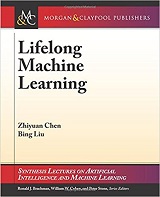
This book is an introduction to an advanced Machine Learning paradigm that continuously learns by accumulating past knowledge that it then uses in future learning and problem solving. In contrast, the current dominant machine learning paradigm learns in isolation: given a training dataset, it runs a machine learning algorithm on the dataset to produce a model that is then used in its intended application.
-
This book provides an accessible overview of the field of Statistical Learning, an essential toolset for making sense of the vast and complex data sets that have emerged in fields ranging from biology to finance to marketing to astrophysics in the past twenty years.
-
In this book you will learn how to align on ML strategies in a team setting, as well as how to set up development (dev) sets and test sets. Recommendations for how to set up dev/test sets have been changing as Machine Learning is moving toward bigger datasets, and this explains how you should do it for modern ML projects.
-
This book explains the principles behind the automated learning approach and the considerations underlying its usage.
-
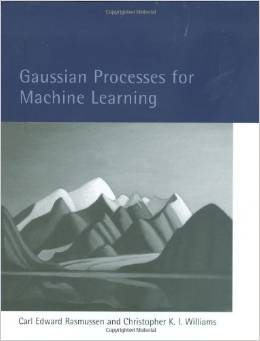
Gaussian Processes (GPs) provide a principled, practical, probabilistic approach to learning in kernel machines. GPs have received increased attention in the machine-learning community over the past decade, and this book provides a long-needed systematic and unified treatment of theoretical and practical aspects of GPs in machine learning. The treatment is comprehensive and self-contained, targeted at researchers and students in machine learning and applied statistics.
-
This book is a primer on machine learning for programmers trying to get up to speed quickly. You'll learn how machine learning works and how to apply it in practice. It focuses on just a few powerful models (algorithms) that are extremely effective on real problems, rather than presenting a broad survey of machine learning algorithms as many books do.