Deep Learning and Neural Networks
Reference documents in Deep Learning and Neural Networks.
Documents in Deep Learning and Neural Networks
Page 1 of 2-
Microsoft Cognitive Toolkit is a very popular and recently open sourced deep learning toolkit by Microsoft. Cognitive Toolkit is used to train fast and effective deep learning models. This book will be a quick introduction to using Cognitive Toolkit and will teach you how to train and validate different types of neural networks, such as convolutional and recurrent neural networks.
-
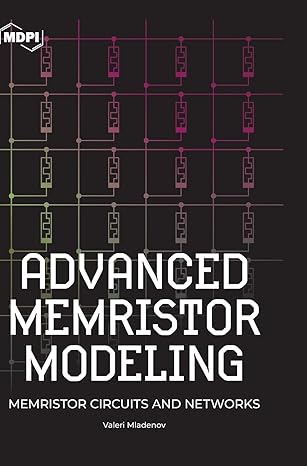
Due to its nano-scale dimensions, non-volatility and memorizing properties, the Memristor is a sound potential candidate for application in computer high-density memories, artificial neural networks and in many other electronic devices.
-
This book covers a range of models, circuits and systems built with Memristor devices and networks in applications to neural networks. It is divided into three parts: (1) Devices, (2) Models and (3) Applications. The resistive switching property is an important aspect of the memristors, and there are several designs of this discussed in this book, such as in metal oxide/organic semiconductor nonvolatile memories, nanoscale switching and degradation of resistive random access memory and graphene oxide-based memristor.
-
The ancient strategy game of Go (Weiqi) is an incredible case study for AI. In 2016, a deep learning-based system shocked the Go world by defeating a world champion. Shortly after that, the upgraded AlphaGo Zero crushed the original bot by using deep reinforcement learning to master the game. Now, you can learn those same deep learning techniques by building your own Go bot!
-
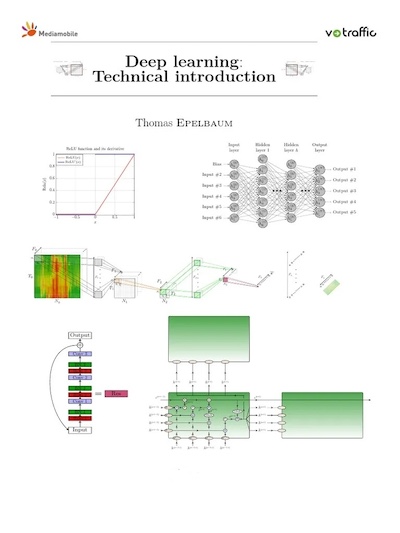
This book presents in a technical though hopefully pedagogical way the three most common forms of neural network architectures: Feedforward, Convolutional and Recurrent. For each network, their fundamental building blocks are detailed. The forward pass and the update rules for the backpropagation algorithm are then derived in full.
-
Artificial Intelligence is changing our lives, and solutions based on Deep Learning are leading this transformation. Deep Learning is now of major interest to private companies, since it can be applied to many areas of activity. But getting started in this technology is not an easy task. Many enthusiastic professionals in the field of Deep Learning have difficulties establishing a starting point and breaking into this area of innovation, given the enormous amount of resources available today and the complexity of the field.
-
Deep learning is often viewed as the exclusive domain of math PhDs and big tech companies. But as this hands-on guide demonstrates, programmers comfortable with Python can achieve impressive results in deep learning with little math background, small amounts of data, and minimal code. How? With fastai, the first library to provide a consistent interface to the most frequently used deep learning applications.
-
This is an open source, interactive book provided in a unique form factor that integrates text, mathematics and code, now supports the TensorFlow, PyTorch, and Apache MXNet programming frameworks, drafted entirely through Jupyter notebooks.
-
This book contains a practical and comprehensive introduction of everything related to deep learning in the context of physical simulations, focuses on physical loss constraints, more tightly coupled learning algorithms with differentiable simulations, training algorithms tailored to physics problems, as well as reinforcement learning and uncertainty modeling.
-
This is the online version of the published book. It's Free!
-
This textbook establishes a theoretical framework for understanding deep learning models of practical relevance, provide clear and pedagogical explanations of how realistic deep neural networks actually work.
-
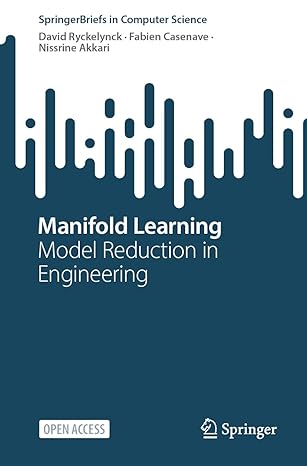
The aim is to provide tools for a better understanding and implement reduced order models by using: physics-based models, synthetic data forecast by these models, experimental data and deep learning algorithms. The book involves a survey of key methods of model order reduction applied to model-based engineering and digital twining, by learning linear or nonlinear latent spaces.
-
This book thoroughly explains deep learning models and how to use Python programming to implement them in applications such as NLP, face detection, face recognition, face analysis, and virtual assistance (chatbot, machine translation, etc.).
-
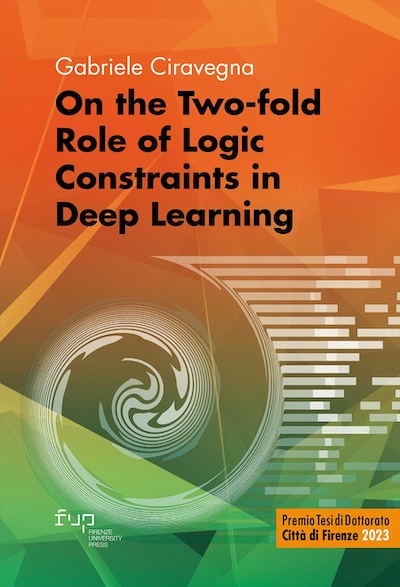
This open access book addresses three key challenges in Deep Learning (DL): reducing the need for supervision, defending against adversarial attacks, and explaining neural network behavior.
-
An authoritative, accessible, and up-to-date treatment of deep learning that strikes a pragmatic middle ground between theory and practice. Ruthlessly curates only the most important ideas to provide a high density of critical information in an intuitive and digestible form.