Database Theory and Systems
Reference documents in Database Theory and Systems.
Documents in Database Theory and Systems
Page 1 of 1-
The book presents a conceptually complete coverage of indispensable topics that each MIS student should learn if that student takes only one database course. Database design and data modeling encompass the minimal set of topics addressing the core competency of knowledge students should acquire in the database area. The text, rich examples, and figures work together to cover material with a depth and precision that is not available in more introductory database books.
-
Practical and easy to understand, this book gives readers a solid foundation in database design and implementation. Filled with visual aids such as diagrams, illustrations, and tables, this market-leading book provides in-depth coverage of database design, demonstrating that the key to successful database implementation is in proper design of databases to fit within a larger strategic view of the data environment.
-
Learn the basics of relational database theory and other information models. This book discusses database logical and physical design, and introduces you to the SQL language. Practice with hands-on exercises! Read this free ebook to:
-
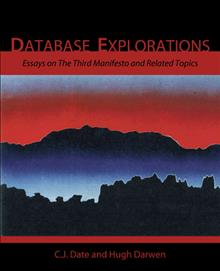
This book consists of a collection of exploratory essays on database management - more specifically, on issues arising from and related to The Third Manifesto, which is a proposal by the authors for a foundation for data and database management systems (DBMSs)
-
This is a book on database management that is based on an earlier book by the same authors, Foundation for Future Database Systems: The Third Manifesto. It can be seen as an abstract blueprint for the design of a DBMS and the language interface to such a DBMS.
-
This book covers database systems and database design concepts. It provides short, easy-to-read explanations of how to get database design right the first time. It also offers numerous examples to help you avoid the many pitfalls that entrap new and not-so-new database designers.
-
This book describes how to apply the business and technical approaches of Database Lifecycle Management (DLM) in order to make database change management processes more visible, predictable and measurable. We describe the DLM skills and methods that will support a continuous and incremental approach to database change, establish predictable delivery times and result in higher quality, more maintainable database applications.
-
Databases are not black boxes. Understand them by building your own from scratch!
-
This book is an introductory text that introduces Microsoft Access Office 365 and relational database design. Attempted to give a suitable introduction to normalization theory for the beginning database users and to relate that material to other topics such as entity relationship diagrams.
-
Discover critical considerations and best practices for improving database performance based on what has worked, and failed, across thousands of teams and use cases in the field.
-
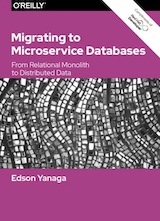
Code is easy, State is hard. Learning how to deal with your monolithic relational databases in a microservices structure is key to keeping pace in a quickly changing workplace. Microservices certainly aren’t a panacea, but they’re a good solution if you have the right problem.
-
Replicating a database can make our applications faster and increase our tolerance to failures, but there are a lot of different options available and each one comes with a price tag. How do I reduce the effort in the Database Replication work to be done to get problems solved?
-
Information modeling is a critical process in content management. This book provides basic concepts of information models and explains how to design database based on data analysis and SQL models. It also provides case studies of database design based on information modeling techniques.
-
This book uses a simple step by step approach to explain the essential relational database design modelling techniques, and shows how Oracle SQL can be used to implement a database. There are numerous practical exercises with feedback.
-
Whether you're a database designer, programmer, analyst, or manager, you've probably encountered some of the challenges-and experienced some of the frustrations-associated with time-varying data.