Computational Linguistics and Natural Language Processing
Reference documents in Computational Linguistics and Natural Language Processing.
Documents in Computational Linguistics and Natural Language Processing
Page 1 of 1-
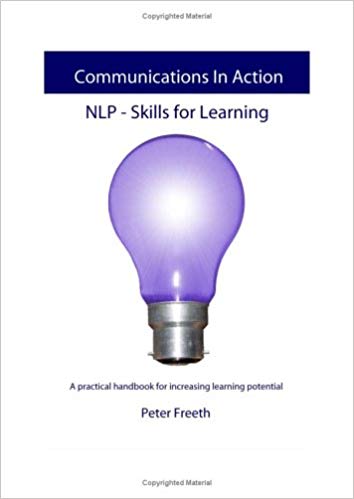
This is a book about the application of NLP (Neuro Linguistic Programming) in teaching, training and education. It is a book about NLP for trainers and a general introduction to NLP - all in one. If you're an experienced trainer or presenter and you want to find out, easily, how NLP can help you to transform your skills then this book is for you. This book is written from the outset to both teach and demonstrate the application of NLP as a learning tool.
-
This open access book introduces Vector semantics, which links the formal theory of word vectors to the cognitive theory of linguistics by presenting a formal theory, cast in terms of linear polytopes, that generalizes both word vectors and conceptual structures, by treating each dictionary definition as an equation, and the entire lexicon as a set of equations mutually constraining all meanings.
-
Mathematical Linguistics introduces the mathematical foundations of linguistics to computer scientists, engineers, and mathematicians interested in natural language processing (NLP). The book presents linguistics as a cumulative body of knowledge from the ground up: no prior knowledge of linguistics is assumed. As the first textbook of its kind, this book is useful for those in information science and in natural language technologies.
-
Although the notion of meaning has always been at the core of translation, the invariance of meaning has, partly due to practical constraints, rarely been challenged in Corpus-based Translation Studies.
-
This book presents a rationale for learning about Machine Translation (MT), and provides both a basic introduction to contemporary machine-learning based MT, and a more advanced discussion of neural MT.
-
Natural language processing (NLP) has found its application in various domains, such as web search, advertisements, and customer services, and with the help of deep learning, we can enhance its performances in these areas.
-
This introductory book looks at all aspects of Machine Translation: covering questions of what it is like to use a modern Machine Translation system, through questions about how it is done, to questions of evaluating systems, and what developments can be foreseen in the near to medium future.