Computational Complexity
Reference documents in Computational Complexity.
Documents in Computational Complexity
Page 1 of 1-
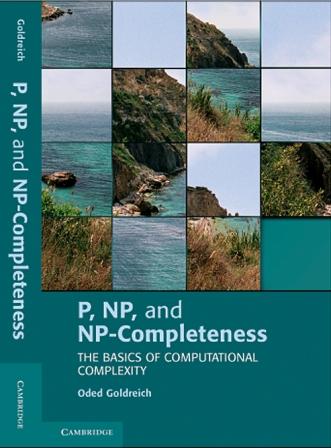
This undergraduate introduction to computational complexity offers a wide perspective on two central issues in theoretical computer science. The book starts with the relevant background in computability, including Turing machines, search and decision problems, algorithms, circuits, and complexity classes, and then focuses on the P-versus-NP Question and the theory of NP-completeness.
-
This book offers a conceptual introduction to the study of the intrinsic complexity of computational tasks. It is intended to serve advanced undergraduate and graduate students, either as a textbook or for self-study. It is also useful to experts, since it provides expositions of the various sub-areas of complexity theory such as hardness amplification, pseudorandomness, and probabilistic proof systems.
-
This beginning graduate textbook describes both recent achievements and classical results of computational complexity theory, including interactive proofs, PCP, derandomization, and quantum computation. It can be used as a reference, for self-study, or as a textbook. More than 300 exercises are included.
-
This book provides a broad, conceptual overview of computational complexity theory - the mathematical study of efficient computation. With important practical applications to computer science and industry, computational complexity theory has evolved into a highly interdisciplinary field, with strong links to most mathematical areas and to a growing number of scientific endeavors.
-
Research on the complexity of Boolean functions in non-uniform computation models is now part of one of the most interesting and important areas in theoretical computer science. It has a direct relevance to practical problems in the computer aided design of digital circuits.
-
This book is an introduction to the basic concepts of computability, complex, and the theory of programming languages.
-
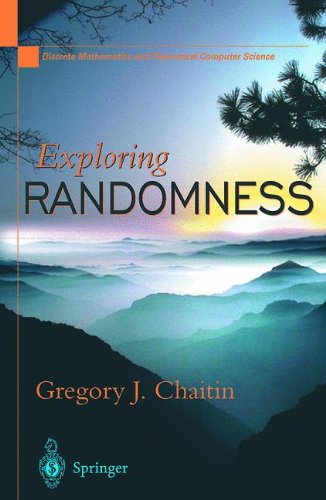
The book is devoted to a Lisp formalism for exploring the basic ideas, concepts and results on program-size complexity and random sequences. The book contains a wealth of exercises, ranging from the 'mathematical equivalent of finger warm-ups for pianists' to substantial programming projects, from open questions to questions the author cannot even formulate. Highly recommended to anyone interested in understanding algorithmic information theory through programming.
-
This book is about complexity science, data structures and algorithms, intermediate programming in Python, and the philosophy of science.