Advanced Java Programming
Reference documents in Advanced Java Programming.
Documents in Advanced Java Programming
Page 1 of 1-
In Beyond Java, Bruce chronicles the rise of the most successful language of all time, and then lays out, in painstaking detail, the compromises the founders had to make to establish success. Then, he describes the characteristics of likely successors to Java. He builds to a rapid and heady climax, presenting alternative languages and frameworks with productivity and innovation unmatched in Java. He closes with an evaluation of the most popular and important programming languages, and their future role in a world beyond Java.
-
With new features like lambda expressions, streams, and the new Date and Time APIs, the Java 8 release demonstrates that a language can be modernized without compromising stability or backward compatibility.
-
A complete guide to writing Java programs that read and write XML documents. Shows developers how to save XML documents, read XML documents, communicate with network servers that send and receive XML data, and integrate XSLT into their programs.
-
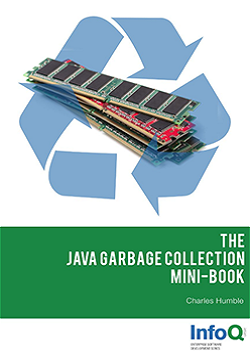
The Java Garbage Collection Mini-book provides a concise, accessible guide for Java architects and senior developers who want to understand what garbage collection is, how it works, and how it impacts the execution of their programs.
-
The complete tutorial, programming guide, and reference for Java Native Interface (JNI), the interface which facilitates the integration of Java with existing C and C++ code. This book answers that need by presenting no-nonsense, nuts-and-bolts coverage of the new "niche" APIs like JNI, JTAPI, and the Java Wallet in a task-oriented reference format that gives coders the answers they need.
-
This book is written for Java developers who wants to build microservices using the Spring Boot/Cloud stack and who wants to deploy them to Kubernetes and OpenShift. Teach you how to build and design microservices using Java and the Spring platform.
-
This book approaches the real-time issues via established web-programming and concurrency techniques, which will reveal a few deficiencies of the standard Java platform. A real-time package (class library) and a few run-time extensions will be presented. The usage of these additions to create high performance real-time control software is then described in a real-time programming chapter which is central the topic of this book. The reader should then gain additional understanding and programming skill by studying the remaining chapters about scheduling, processes, and applications.
-
Naked Objects for Java is a full-stack open source application development framework, designed to let you rapidly develop domain-driven business applications. The aim of this book is to introduce you to the concept of designing business systems from naked objects, and to enable you to start building such systems using the Naked Objects framework.
-
Java is still quite easy to learn, especially if we focus on the most essential tools. Start with the syntax, then object-orientation, flow control, collections and Java 8 streams. Design patterns hold everything together.
-
This updated edition of the Nutshell guide not only helps experienced Java programmers get the most out of versions through Java 17, it also serves as a learning path for new developers. Chock-full of examples that demonstrate how to take complete advantage of modern Java APIs and development best practices, this thoroughly revised book includes new material on recent enhancements to the Java object model that every developer should know about.
-
This book provides a concise guide to the key concepts and features introduced in Java 23. It is intended for developers who are already familiar with Java and want to learn about the latest advancements in the language.
-
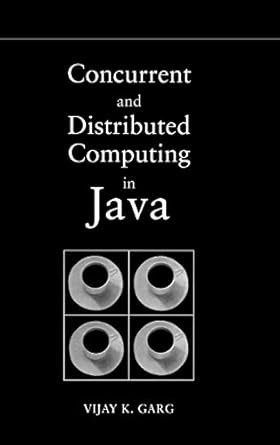
This book addresses fundamental concepts in concurrent computing with Java examples, deals with techniques for programming in shared-memory based systems, as well as programming in a message-passing system.